

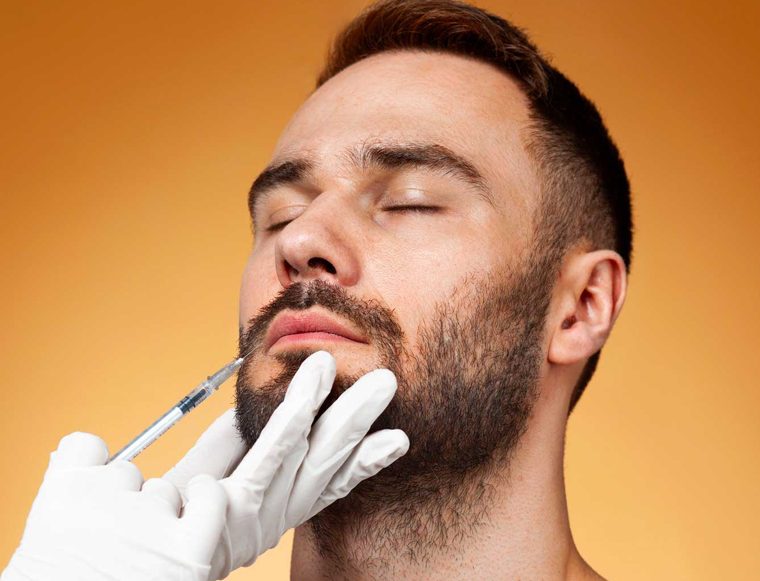
Beards are undoubtedly one of the most fundamental complements to a charismatic image, defining facial features in a man’s appearance. However, due to many reasons such as genetic factors, accidents, skin conditions, or stress, not every man can have the bushy and shaped beard they desire. If you see sparse areas when you look in the mirror or if you have a condition like a congenital lack of beard, you can say a permanent goodbye to this situation thanks to today’s advanced medical aesthetic applications. At Zeynep Metin Hair Transplant Clinic, beard transplantation is one of the most common applications we encounter in our center, providing a serious increase in the self-confidence of our patients. So, what is beard transplantation, which has become increasingly popular in recent years and allows you to have flawless facial features? In this article, we have prepared a detailed guide based on reliable medical data to clear all the question marks in your mind.
What is Beard Transplantation? How Does the Basic Logic Work?
Beard transplantation is the process of transferring healthy hair follicles (grafts) taken from a person’s own body to areas where hair does not grow at all (beardlessness) or is not at the desired density on the cheeks, chin, sideburns, and neck area using microsurgical methods. The simplest answer to the question “What is beard transplantation?” is actually a medical art of relocation. Hair from genetically strong, non-shedding parts of your body is taken and transplanted to your face with an aesthetic design. This process is carried out not by adding a synthetic material from the outside, but by using your own living cells. Therefore, the results are lifelong and offer a one hundred percent natural appearance.
The nape area is generally preferred as the donor (provider) area in hair follicle transfer. Since the hair follicles in the nape area offer the closest tissue structure to beard hair, a great harmony is achieved after transplantation. However, if there are not enough grafts in the nape, unnecessary hair in the person’s sub-chin or neck areas can also be evaluated as a donor.
Who is Suitable for Beard Transplantation? In Which Situations is it Preferred?
Many patients who apply to our clinic are concerned about whether beard transplantation can be performed on their facial structure. In fact, this process appeals to a wide range of candidates:
- Those Experiencing Sparsity Due to Genetic Reasons: People whose beards are thin, gapped, or disproportionate due to family genetic heritage.
- Congenital Beardlessness: Men who have no hair development on their faces are great candidates for this procedure if they have enough hair follicles in the nape area.
- Scar, Burn, and Surgery Marks: The situation where hair does not grow in a certain area of the face after past accidents or operations. Beard transplantation is the most natural camouflage method known to cover these scar tissues.
- Those with Asymmetrical Beard Lines: Those who want to correct aesthetic disproportions, such as the beard being lower on one cheek and higher on the other, and to create symmetrical and sharp lines.
How is Beard Transplantation Performed? Stages of the Procedure
The secret of a successful result lies in the meticulous and personalized management of the process. We can summarize the steps of the process of achieving permanent and natural beards as follows:
- Consultation, Analysis, and Design Phase The most critical point of the process is planning. Experts determine the most suitable beard line for your facial features, jaw structure, and age. At this stage, the number of grafts to be taken from the nape is calculated by performing computer-aided analyses. Depending on the targeted beard density and the size of the gaps on the face, the number of grafts needed can vary between 400 and 3500.
- Local Anesthesia and Graft Collection Local anesthesia is applied to both the donor area and the area to be transplanted so that you do not feel any pain or ache during the procedure. Then, healthy hair follicles (usually in the form of single or double follicular units) are carefully collected one by one from the nape area with the help of micromotors. It is of vital importance that the roots are kept in special solutions to prevent damage and maintain their vitality.
- Channel Opening and Implementation (FUE and DHI Techniques) The main factor determining a natural beard transplant result is the opening angle of the channels. The exit directions of the hairs in the facial area are different from the hair on the head; they emerge at a much narrower and more horizontal angle to the skin. The techniques used vary according to the need:
- FUE Technique: Micro-incisions (channels) are opened in the target area as many as the number of grafts, and the collected follicles are placed there one by one by the surgeon.
- DHI Technique: Thanks to special medical pens called “Choi Pen,” the follicle placement process is performed directly without the need to pre-open a channel in the skin. The DHI method significantly speeds up the healing process because it does not create an incision in the skin and allows for a much denser transplantation.
Recovery Process: What Awaits You After Beard Transplantation?
After the operation, which takes an average of 4-5 hours, our patients can return to their daily lives with minor restrictions on the same day. Seeing small reddish crusts the size of a pinhead in the transplanted area for the first few days after the procedure is completely a natural part of the healing process.
- First Days and Washing: For the first 3 days, you should not force your facial expressions (laughing, stretching, hard chewing), you should not rub your face, and you should sleep on your back to prevent friction of the grafts. In the first week, the transplanted hairs should be washed gently with the recommended shampoo and lukewarm water.
- Shock Loss Process: About 2-3 weeks after the procedure, a large portion of the transplanted beards enters the shedding phase. Although this situation sometimes causes panic in patients, it is a completely temporary and expected “shock loss” process. The follicles are attached under the skin; only the lifeless hair shafts on them fall out.
- Permanent Results: From the 3rd month onwards, your new and permanent beards start to fill your face. At the 6th month, your beards gain a natural form, and it takes an average of 10 to 12 months to see the full final, bushy result. Once the beards have grown completely (usually after 2-3 weeks with doctor’s approval), you can return to your normal shaving routine.
What are the Advantages of Beard Transplantation?
Why should you turn to this medical solution instead of wasting time with beard serums, temporary dyes, and cosmetic products that provide short-term motivation?
- Lifelong Permanence: Since the grafts taken from the nape area are genetically resistant to shedding, the transplanted beards stay on your face for a lifetime. It does not require you to spend money repeatedly.
- Freedom of Styling: The transplanted hairs are completely your own natural tissue. When they grow, you can shave them as you wish, cut them in different styles, and use a machine or a razor.
- Aesthetic and Psychological Confidence: Reconciling with your reflection in the mirror, getting rid of asymmetries, and exhibiting a stronger, more masculine image in social and professional life.
Why Zeynep Metin Hair Transplant Clinic?
Beard transplantation requires a much finer art and a much more sensitive aesthetic perspective than classic hair transplantation. Even a small angle or direction error in the facial area can negatively affect the aesthetic appearance and cause an artificial look. Therefore, it is essential that the procedure is performed by professional hands who know beard anatomy very well and can calculate graft distribution millimetrically. As Zeynep Metin Hair Transplant Clinic, we make personalized designs specific to the facial anatomy of each patient and apply modern medical aesthetic techniques such as DHI and FUE with great care.
