


The most widely used hair transplantation technique in the world is FUE (Follicular Unit Extraction). This technique consists of collecting hair follicles, opening the canals and transplanting the follicles called grafts into the opened canals.
Special sapphire-tipped pens have been developed as a method that minimizes tissue deformation during canal opening, which is one of the stages of the FUE technique, and allows canals to be opened with maximum frequency. This transplantation model, called Sapphire FUE, is an FUE operation using pens with tips made of real sapphire.
Our experts will contact you as soon as possible.
Resetting in seconds.
We faced problems while connecting to the server or receiving data from the server. Please wait for a few seconds and try again.
If the problem persists, then check your internet connectivity. If all other sites open fine, then please contact the administrator of this website with the following information.
TextStatus: undefined
HTTP Error: undefined
Some error has occured.
In the sapphire FUE hair transplantation technique, hair follicles are collected using the FUE technique. However, the channels in the area where hair transplantation will be performed are opened not with steel as in the FUE method, but with sapphire ore in pen form.
Sapphire tips enable much smaller, smoother and denser microchannels to be opened in the transplantation area than steel. The micro opening of the channels minimizes tissue deformation and reduces crusting. Thus, the scalp heals quickly after the application and there is no visible scar. These microchannels opened with sapphire FUE hair transplantation also allow the hair follicles to be transplanted frequently and in accordance with the natural growth direction. Thanks to this technique, those who experience hair loss have natural hair that is indistinguishable from their own hair.
Sapphire FUE hair transplantation can also be combined with other methods that increase comfort and patient satisfaction, such as sedation hair transplantation and unshaven hair transplantation.
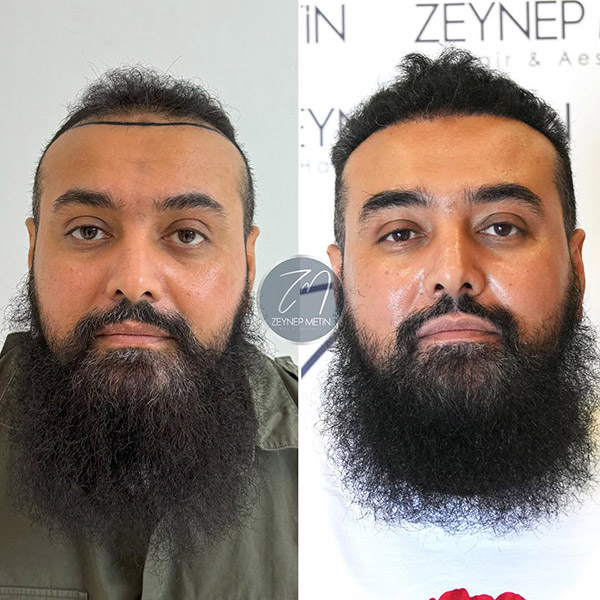
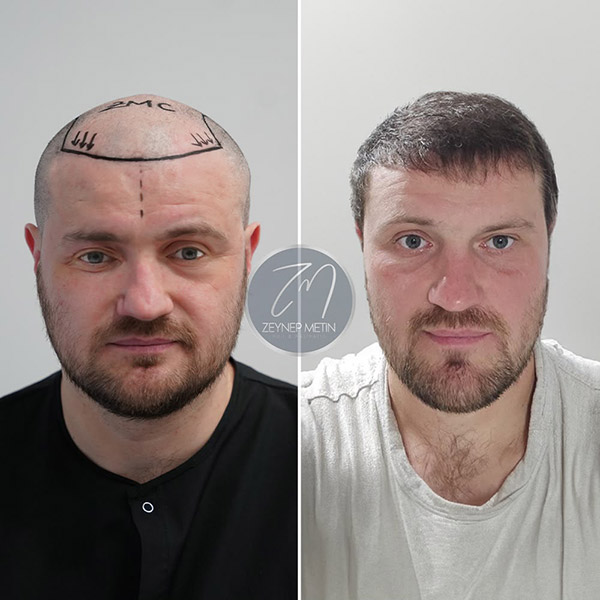
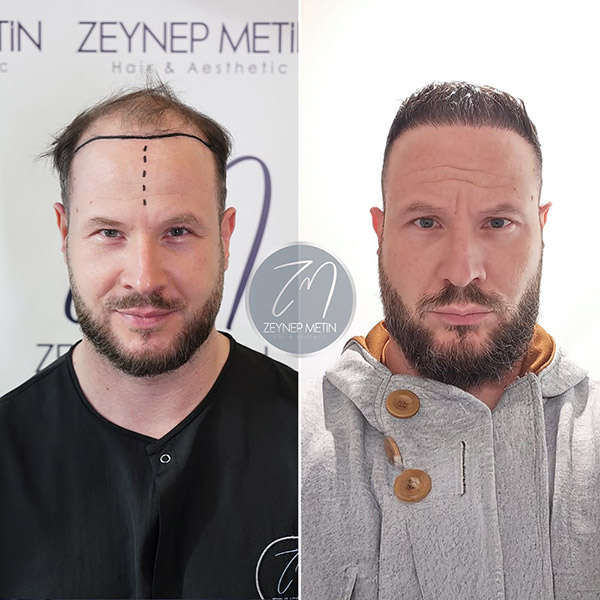
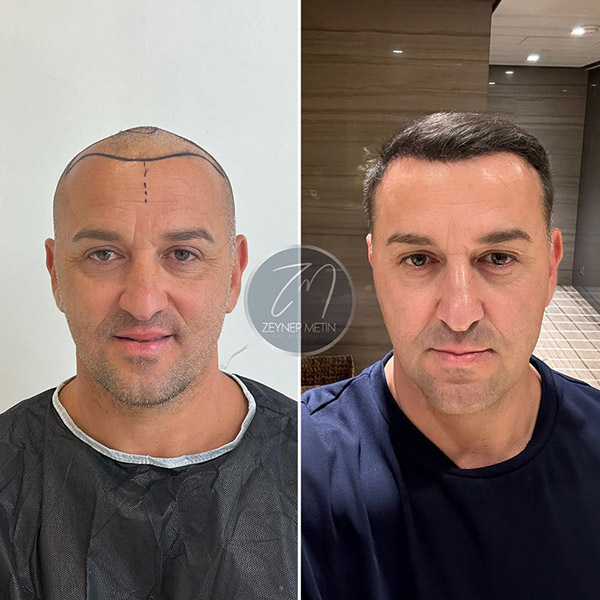
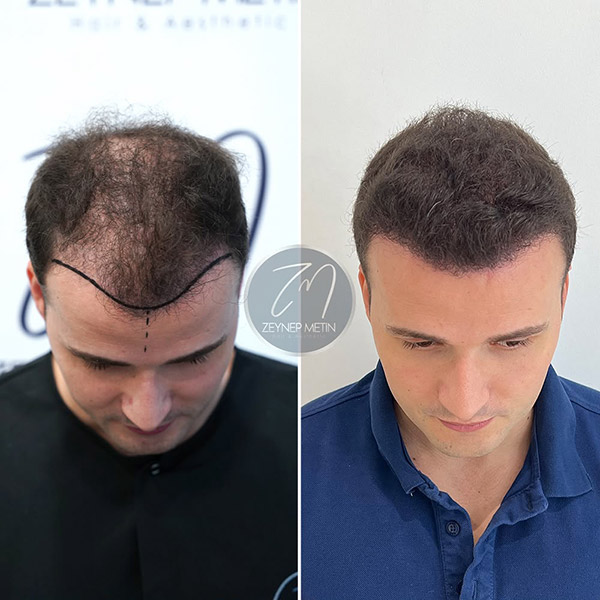
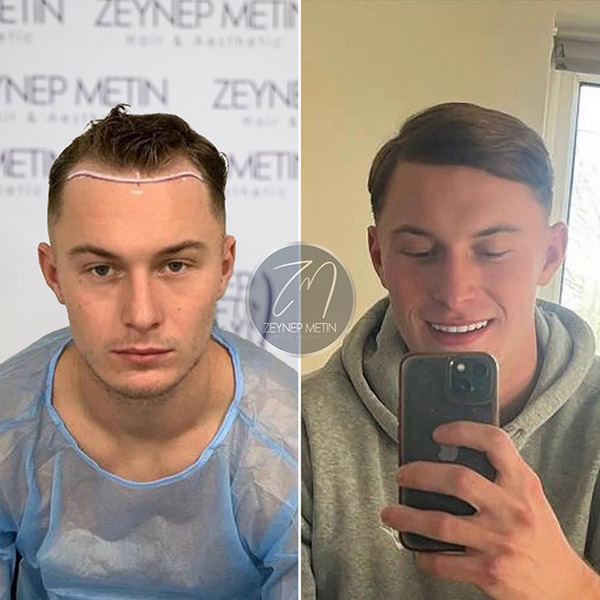
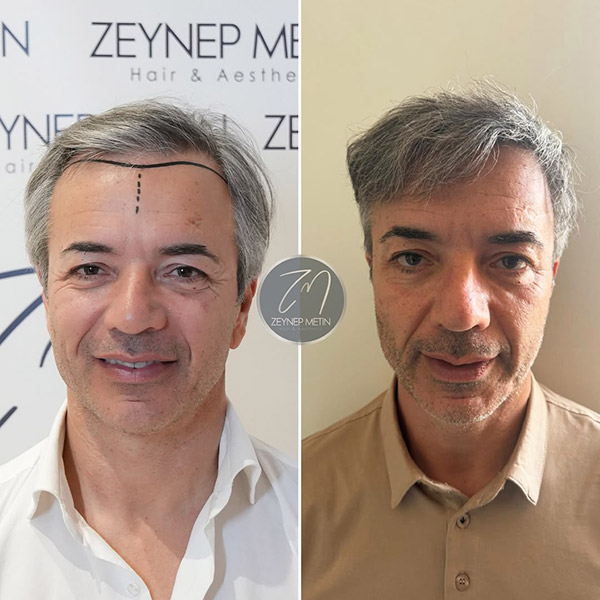
All women and men between the ages of 20-60 who have enough hair follicles in the donor area can regain their lost hair with the Safir FUE hair transplantation technique.
Safir FUE hair transplantation can be used in case of severe hair loss in a large area, as well as a permanent solution for typical hair loss such as opening at the temples, receding forehead line, hair loss from the crown or homogeneous thinning.
One of the main characteristics of Sapphire FUE is the use of specially designed sapphire blades during the channel-opening stage. While traditional FUE procedures may use steel blades, sapphire blades have a smooth and precise surface that allows smaller microchannels to be created in the recipient area.
The purpose of these microchannels is to prepare suitable spaces for the extracted grafts while taking the planned hair direction, angle and density into account. Because channel creation plays an important role in the final appearance of a hair transplant, careful planning is required before implantation begins.
Sapphire FUE should therefore be considered a variation of the FUE technique rather than a completely separate extraction method. The follicles are still collected individually from the donor area, while the main difference is found in the way the recipient channels are prepared.
Sapphire FUE can be considered for different patterns of hair loss. It may be used to restore a receding frontal hairline, fill thinning areas around the temples, improve density across the mid-scalp or cover selected areas of the crown.
The treatment plan depends on how hair loss is distributed and how many healthy grafts can be safely obtained from the donor area. In patients with larger areas of thinning, graft distribution becomes particularly important because the available follicles need to be positioned strategically.
Rather than focusing only on the total number of grafts, planning should also consider the natural direction of the existing hair and how density will be distributed between different parts of the scalp.
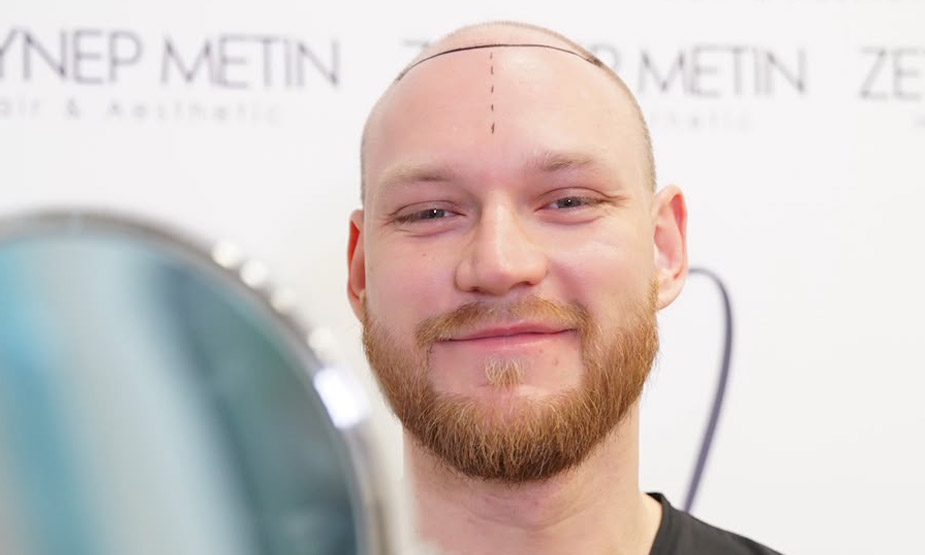
Hair density is not determined simply by placing as many grafts as possible into one area. During Sapphire FUE planning, the available donor capacity, existing hair density, scalp characteristics and size of the recipient area are evaluated together.
The frontal hairline usually requires detailed placement because this area strongly influences the overall appearance of the transplant. Single-hair grafts may be positioned around the front of the hairline, while grafts containing more follicles can be distributed further behind to support visual density.
The size and direction of the recipient channels are also planned according to the natural growth pattern of the surrounding hair. This helps transplanted follicles blend more naturally with existing hair as they begin to grow.
After Sapphire FUE, temporary redness, mild swelling, sensitivity and small crusts may appear in the donor and recipient areas. These are generally part of the early healing process and gradually decrease as the scalp recovers.
During the first days, the transplanted grafts should be protected from unnecessary rubbing, pressure and trauma. Washing and aftercare instructions should be followed carefully to support the healing of both the donor and recipient areas.
As the scalp continues to recover, some transplanted hairs may shed during the following weeks. This temporary shedding does not necessarily mean that the follicles have been lost. The transplanted follicles remain beneath the skin and, after entering their normal growth cycle, new hair growth can gradually become visible over the following months.
Sapphire crystals can provide a natural look by creating smaller and sharper angles. In addition, the healing process is usually fast, with a lower risk of bleeding and scarring.
The recovery process after sapphire hair transplantation is usually fast. There may be mild swelling or redness after the procedure, but these disappear in a short time.
Sapphire hair transplantation is generally suitable for people who experience hair loss and are considering hair transplantation. However, your suitability should be evaluated depending on your hair structure, health status and other factors.
Zeynep Metin
Hair Transplant Clinic
Hello. 👋
You can contact us via WhatsApp to get detailed information about our treatments and processes.
Start Chat
Live Support
Adding {{itemName}} to cart
Added {{itemName}} to cart