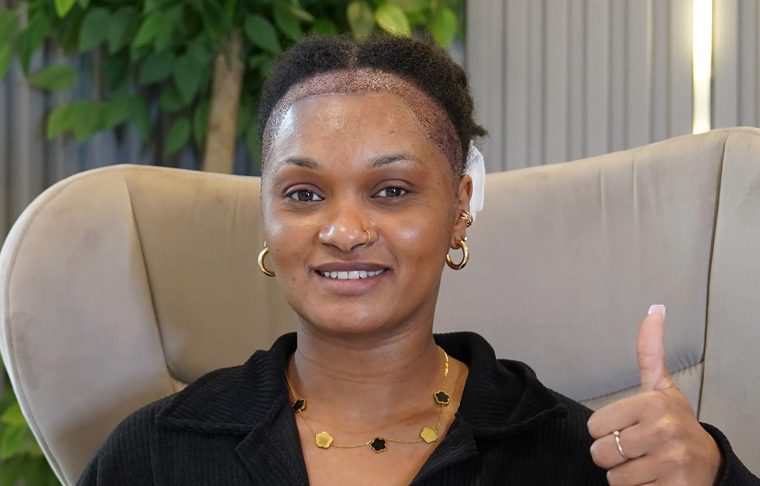
Afro-textured hair can often create the appearance of greater visual density because curly and coily strands cover more space above the scalp than straight hair. This does not necessarily mean that someone with Afro hair has more follicles or a naturally higher hair count. Visual density and actual hair density are two different things.
A person may have a moderate number of hairs per square centimetre and still appear to have very full hair because each strand curves, overlaps and helps cover the scalp. This characteristic can also be important when planning a hair transplant, as the visual result depends on much more than the number of grafts alone.
Hair thickness, curl pattern, hair-to-scalp colour contrast, donor density and the way grafts are distributed all influence how full transplanted hair can eventually appear.
What Is the Difference Between Hair Density and Visual Density?
Hair density usually refers to the actual number of hairs or follicular units within a certain area of the scalp. Visual density describes how full the hair appears when viewed normally.
These measurements do not always produce the same impression. Someone may have a relatively high number of follicles but still show more scalp if the hair is very fine, straight or creates strong contrast against the skin.
Afro-textured hair behaves differently because the strands usually bend and curve rather than lying flat in one direction. Each strand can therefore occupy a larger visual area and overlap with nearby hairs.
This effect can reduce the amount of visible scalp between individual strands and create a fuller appearance without requiring extremely high follicular density.
The same principle is important in hair transplantation. The goal is not simply to place the largest possible number of grafts into an area. A natural-looking result depends on how effectively the available grafts create coverage.
Why Can Curly and Coily Hair Look Fuller?
The shape of the hair is one of the main reasons Afro hair can provide strong visual coverage.
Straight hair tends to follow a relatively direct path away from the scalp. Curly and coily hair changes direction repeatedly as it grows. This creates more volume above the scalp and allows individual strands to cover a wider area.
Hair shaft thickness can also contribute to the final appearance. Thicker strands generally provide more coverage than very fine strands because they physically occupy more visible space.
Another factor is the relationship between hair colour and scalp colour. Lower contrast between the hair and scalp can make exposed areas less noticeable, while high contrast can make the same amount of thinning appear more obvious.
This is why two people with the same number of follicles may look very different when their hair texture, thickness and colour contrast are different.
Curly hair is known to provide greater scalp coverage than straight hair, while thicker hair diameter can also improve the appearance of density.
Does Afro Hair Need Fewer Grafts for Good Coverage?
Afro hair may sometimes create strong visual coverage with fewer grafts than fine, straight hair, but this should never be treated as a fixed rule.
The required number of grafts depends on the size of the recipient area, the strength of the donor region, the thickness of the hair, the curl pattern and the amount of existing hair.
For example, a patient with thick, tightly curled hair and a relatively small area of thinning may achieve noticeable coverage with a carefully planned distribution of grafts. A patient with a larger area of advanced hair loss may still require a substantial number of follicular units.
The frontal hairline, mid-scalp and crown also require different planning. Using too many grafts in one area simply to maximise density may reduce the donor supply available for future hair loss.
During an Afro Hair Transplant, the aim should therefore be to use the available follicles strategically rather than focusing only on reaching the highest possible graft number.
Visual density should always be balanced with donor preservation and long-term planning.
How Does Afro Hair Texture Affect Hair Transplant Planning?
Afro-textured hair can provide an advantage in terms of visual coverage, but it can also make the transplantation process more technically demanding.
The visible curl often continues beneath the skin, meaning the follicle itself may follow a curved path. During individual follicular extraction, this structure must be considered carefully to reduce the risk of damaging the graft.
There can also be considerable variation between patients. Some people have loose curls, while others have tightly coiled hair. Skin thickness, follicle curvature, donor density and hair diameter can all differ.
For this reason, Afro hair transplantation should not be planned according to hair texture alone. The donor area needs to be assessed individually to determine how many grafts can be removed safely and how they should be distributed.
Once the grafts are implanted, their angle and direction should also match the natural pattern of the surrounding hair. Natural curl direction plays an important role in creating a result that blends with the existing hair.
Strong visual density is therefore not simply a natural advantage of Afro hair. It is something that should be supported by careful extraction, graft handling and placement.
What Determines the Final Visual Density After an Afro Hair Transplant?
The number of grafts is only one part of the final result. Hair shaft thickness, curl pattern, graft quality, donor density and placement all affect how full the transplanted area appears.
The distribution of grafts can be particularly important. Placing every graft at the same density across the scalp may not create the strongest visual improvement.
The frontal area often has a greater effect on appearance because it frames the face. Creating appropriate density in this region while gradually transitioning toward the areas behind it can provide a more balanced result.
The natural direction of the curls should also be respected. Even a good number of healthy grafts may look unnatural if the hairs grow at angles that do not match the surrounding pattern.
The donor area must also remain balanced. Afro hair can sometimes visually conceal reduced density well because of its curl, but this should never be used as a reason for excessive extraction.
The best result is achieved when visual coverage in the recipient area and preservation of the donor region are considered together.
Frequently Asked Questions About Afro Hair Visual Density
Does Afro Hair Naturally Have More Hair Follicles?
Not necessarily. Afro hair can look very dense because of its curly or coily structure even when the actual number of hairs per square centimetre is not higher.
Why Does Afro Hair Look Thicker?
Curly and coily strands bend and overlap as they grow, covering more of the scalp. Hair shaft thickness can also contribute to a fuller appearance.
Does Curly Hair Provide Better Scalp Coverage Than Straight Hair?
Curly hair can generally provide stronger visual scalp coverage because individual strands occupy more space and overlap with surrounding hairs.
Does Afro Hair Need Fewer Grafts During a Hair Transplant?
Sometimes fewer grafts may produce good visual coverage, but this varies from person to person. The required number depends on the treatment area, donor density, hair thickness, curl pattern and desired coverage.
Does More Grafts Always Mean Better Density?
No. Excessive graft placement is not automatically better. The available donor supply, safe spacing and long-term hair loss should all be considered when deciding how many grafts to use.
Does Hair Thickness Affect Visual Density?
Yes. Thicker hair shafts generally cover more surface area than fine hairs and can contribute to a fuller appearance.
Can Afro Hair Hide Scalp Visibility Better?
It often can. The curl pattern creates volume and overlapping strands, which may reduce the amount of scalp visible between the hairs.
Does Hair Colour Affect the Appearance of Density?
Yes. The amount of contrast between the hair and scalp can affect how easily the scalp is seen. Lower contrast can make thinning appear less noticeable.
Will Transplanted Afro Hair Keep Its Natural Curl?
Transplanted follicles generally maintain the characteristics of the donor hair. Afro-textured donor follicles are therefore expected to continue producing hair with their natural curly or coily characteristics.
Can Afro Hair Be Overharvested Even If It Still Looks Dense?
Yes. Visual coverage can sometimes hide reduced donor density. The number of grafts removed should therefore be based on a proper donor assessment rather than appearance alone.