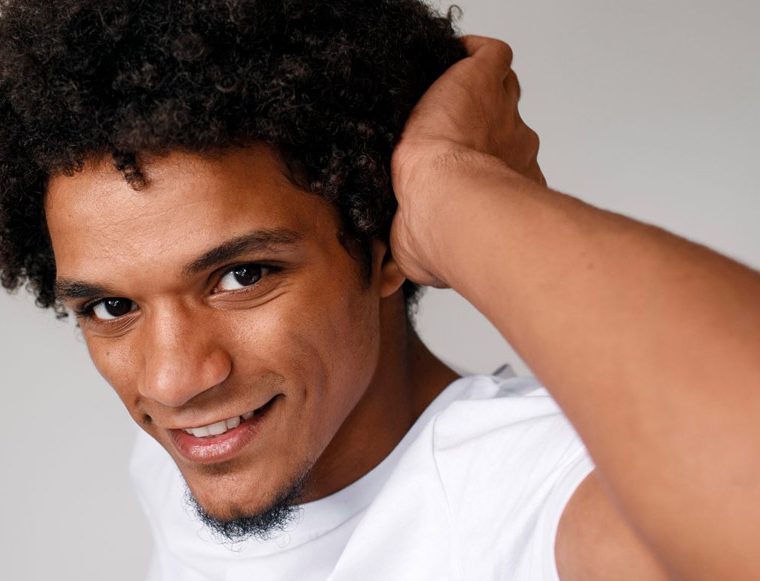
Yes, DHI can be used for Afro hair, provided that the donor area is suitable and the procedure is carefully planned according to the natural structure of curly or coily follicles. Afro-textured hair can create strong visual coverage after transplantation, but the curved shape of the follicles beneath the skin makes the extraction stage more technically demanding.
DHI mainly describes how the extracted grafts are placed into the recipient area. The follicles still need to be removed individually from the donor area before they can be loaded into an implanter pen. For this reason, the success of a DHI hair transplant for Afro hair depends on both the safe extraction of curved follicles and their correct placement.
The suitability of the procedure cannot be determined by hair texture alone. The condition of the donor area, the cause of hair loss, the degree of follicle curvature, scalp health and the number of grafts required must all be evaluated together.
What Is Afro-Textured Hair?
Afro-textured hair usually has a curly, coily or tightly curled appearance. However, the visible curl above the scalp is only part of its structure. The follicle beneath the skin may also follow a curved or angled path.
This is important during hair transplantation because the extraction instrument must follow the direction of the follicle below the skin. With straight hair, the path may be easier to estimate. With tightly curled hair, the follicle can curve beneath the surface in a way that is not immediately visible.
The curved structure of Afro-textured follicles requires an extraction method adapted to the individual scalp rather than a standard approach applied in exactly the same way to every hair type.
Afro hair is also highly diverse. Some people have loose curls, while others have very tight coils. The amount of curvature may even vary between different areas of the same scalp. A detailed donor analysis is therefore necessary before deciding how the follicles should be extracted and implanted.
How Does DHI Work for Afro Hair?
During a DHI hair transplant, individual follicular units are first taken from the donor area, which is usually located at the back and sides of the scalp. The extracted grafts are then placed into a specialised implanter device and inserted into the thinning or bald areas.
The implanter pen can create the recipient opening and place the graft in a controlled movement. This allows the angle, direction and depth of implantation to be planned according to the surrounding hair.
The DHI placement stage can be helpful when working with Afro hair because the natural curl direction plays a major role in the final appearance. Careful placement can help the transplanted hairs blend with the existing curl pattern rather than growing in a visibly different direction.
However, DHI does not remove the challenges associated with extracting curved follicles. The grafts must still be harvested safely before implantation. Both extraction and placement need to be carefully coordinated to protect the follicles and create a natural-looking result.
Is Extracting Afro Hair More Difficult?
The extraction stage can be more challenging because the visible direction of the hair does not always show the exact path of the follicle beneath the skin. A tightly curled hair shaft may continue in a curved direction below the surface.
If the extraction instrument follows only the visible part of the hair, it may cut across the hidden curve of the follicle. This is known as transection. A damaged or transected graft may not be suitable for implantation.
For this reason, the extraction angle, punch selection, movement and depth must be adjusted according to the individual follicle structure. In some cases, a small number of grafts may be extracted first to understand how the follicles curve beneath the skin.
This initial assessment can help determine whether the follicles can be removed safely and which extraction approach is likely to be more appropriate for the donor area.
Does DHI Make Afro Hair Extraction Easier?
DHI does not directly make the extraction stage easier because it mainly refers to how the follicles are implanted into the recipient area. The follicles must be removed from the donor area before they can be loaded into the implanter pen.
This distinction is important because DHI is sometimes described as though the implanter device performs the entire procedure. In reality, extraction and implantation are separate stages. A successful result requires both stages to be performed using methods suited to Afro-textured follicles.
Specialised extraction planning may be needed to follow the curved follicle beneath the skin. Once healthy grafts have been obtained, the DHI placement method can help control their direction, angle and distribution in the recipient area.
The name of the implantation method alone cannot guarantee a successful Afro hair transplant. Donor management, graft quality, follicle handling and long-term hair loss planning remain equally important.
Why Can Afro Hair Provide Strong Visual Coverage?
Curly and coily hair can provide greater visual coverage than straight hair because every strand bends and occupies more space above the scalp. This can make the hair appear fuller even when the number of grafts is similar.
The natural curl may reduce the amount of visible scalp between the hairs. For this reason, Afro-textured hair can sometimes create a strong impression of density without requiring the follicles to be placed as closely as straight and fine hair.
This does not mean that fewer grafts will always be needed. The required number depends on the size of the thinning area, donor density, hair shaft thickness, curl pattern and the level of coverage the person wants to achieve.
Placing too many grafts into a small area is not automatically better. The recipient tissue needs enough space to support the implanted follicles, and the limited donor supply should be protected for possible future hair loss.
Is DHI Suitable for an Afro Hairline?
DHI can be considered for Afro hairline restoration because the implanter pen allows each graft to be placed according to a planned angle and direction. This can be useful when creating a hairline that follows the natural curl and growth pattern.
Afro hairlines should not be designed using the same template for everyone. Natural hairline shapes can vary considerably. Some people have a rounded outline, while others may have straighter or more clearly defined temple areas.
A natural-looking result depends on slight irregularity, gradual density and careful selection of the grafts placed at the front. Single-hair follicular units are generally preferred along the leading edge because thick multi-hair grafts may create an overly heavy or artificial appearance.
The curl should also be considered when deciding the direction of implantation. If the grafts are placed at an unsuitable angle, the growing hair may lift away from the scalp or conflict with the surrounding curl pattern.
Can DHI Be Used for Afro Hair Without Shaving?
A partially shaven or limited-shaving procedure may be possible in selected cases, but it is not suitable for everyone. The ability to avoid full shaving depends on the length of the existing hair, the number of grafts required, the size of the recipient area and how clearly the follicles can be accessed.
Afro hair can sometimes conceal a partially shaved donor area well because the surrounding curls provide coverage. However, tightly curled hair can also make it more difficult to see the direction of individual follicles during extraction.
Shaving may provide a clearer view of the donor area and make it easier to control the extraction process. When a large number of grafts is required, a wider shave may also make the procedure more practical.
The decision should therefore be based on graft safety and donor management rather than appearance alone. Avoiding shaving should not increase the risk of damaging curved follicles.
Can DHI Be Used for Afro Women?
DHI may be suitable for women with Afro-textured hair when the cause and pattern of hair loss are appropriate for transplantation. It can be considered for hairline thinning, traction-related hair loss or selected areas where permanent thinning has developed.
However, not every form of female hair loss is suitable for surgery. Diffuse thinning may also affect the donor area, leaving no clearly stable source of follicles. Active inflammatory or scarring scalp conditions must also be identified before transplantation is planned.
Hairstyles that repeatedly pull on the hairline can contribute to traction alopecia. When the condition is recognised early and the tension is removed, some follicles may recover. When permanent damage has developed and the condition is stable, transplantation may be considered.
The condition of the scalp is particularly important. Hair transplantation should not be carried out in areas affected by active scarring hair loss because continuing inflammation may damage the newly implanted grafts.
Can DHI Treat Afro Hairline Loss Caused by Tight Hairstyles?
Repeated tension from tight braids, extensions, cornrows, weaves or tightly pulled hairstyles can gradually damage the follicles around the hairline and temples. This type of hair loss is commonly associated with traction alopecia.
DHI may be considered when the affected follicles have been permanently damaged and the condition is no longer progressing. Healthy donor follicles can then be transferred into selected areas to improve coverage.
Before transplantation, the source of the tension must be addressed. Continuing the same styling habits after the procedure may place both the surrounding natural hair and the transplanted area under unnecessary strain.
The scalp should also be checked for inflammation, tenderness, scaling or scarring. Transplanting into an area that is still irritated or actively losing hair may lead to an unpredictable result.
Is DHI Suitable for Afro Hair With Scalp Conditions?
The presence of an active scalp condition may make it necessary to postpone transplantation. Persistent itching, painful bumps, inflammation, open wounds, scaling or scarring should be evaluated before any grafts are placed.
Some scalp conditions are temporary and may improve with appropriate care. Others can cause permanent follicle damage. A hair transplant does not treat the underlying disease and should not be used as a substitute for identifying the cause of hair loss.
Afro-textured hair requires careful scalp assessment because traction, inflammatory conditions and scarring forms of hair loss may sometimes appear together. The area must be stable enough to support the transplanted follicles.
A healthy-looking scalp on the day of the procedure is not the only consideration. The history of the hair loss, how quickly it developed and whether it is still progressing are also important.
How Is the Donor Area Evaluated?
The donor area is usually assessed for density, hair shaft thickness, follicular grouping, curl pattern and the likely number of grafts that can be safely removed.
The amount of visible hair at the back of the scalp does not always show how many grafts are available. Curly hair can create strong visual coverage, which may make the donor area appear denser than it actually is.
Removing too many follicles can create patchy or visibly thin areas. The extraction pattern must therefore be distributed carefully rather than concentrated in one location.
The long-term stability of the donor hair also matters. Follicles should be selected from an area expected to remain resistant to the process causing the original hair loss. Donor hair is limited, so it should be treated as a long-term resource rather than used only to maximise the first procedure.
How Is the Correct Number of Grafts Calculated?
The graft requirement depends on the size of the recipient area, the desired coverage, the strength of the donor area and the characteristics of the hair.
Afro hair may provide greater visual volume because of its curl, but this does not allow the graft count to be chosen without an individual analysis. A large bald area may still require a significant number of follicular units.
The frontal hairline, mid-scalp and crown also have different visual priorities. Grafts may be concentrated more heavily in the frontal area because it frames the face and has a greater effect on appearance.
When hair loss is likely to progress, some donor capacity should be preserved for the future. Attempting to cover every area with maximum density in one session may not be the most balanced long-term plan.
What Are the Advantages of DHI for Afro Hair?
One potential advantage of DHI is the ability to control the direction and angle of graft placement. This is particularly relevant for Afro hair because the curl pattern must blend naturally with the surrounding strands.
Implanter devices may also reduce direct handling of the lower part of the graft during placement when they are used correctly. Controlled insertion can support careful placement, although the result still depends on the handling technique and the quality of the grafts.
DHI may also be useful when grafts need to be placed between existing hairs, provided there is enough space to work safely. This can be relevant for selected hairline restoration or density procedures.
These possible benefits do not mean that DHI is automatically better than every other approach for Afro hair. The method should be matched to the follicle structure, donor condition, recipient area and treatment goals.
What Are the Challenges of DHI for Afro Hair?
The main challenge begins before the implanter pen is used. Curved follicles must be extracted without being cut or damaged. This stage can require additional care, adapted instruments and slower extraction.
The grafts themselves may also have curved shapes, which can make loading them into an implanter more delicate. Excessive pressure, bending or poor handling may damage the follicle.
The natural curl direction must be maintained during placement. An implanter provides control, but it does not automatically create a natural growth pattern. Each graft still needs to be positioned according to the surrounding hair and the design of the recipient area.
The duration of the procedure may also vary. Working carefully with tightly curled follicles can take longer than extracting and placing straighter follicles. Speed should not be prioritised over graft integrity.
What Is the Recovery Process Like?
The recovery process after a DHI Afro hair transplant is generally similar to other individual follicular transplantation procedures. Small scabs, redness, tenderness and mild swelling may appear during the early days.
The recipient area should be protected from rubbing, scratching and direct pressure. Washing should begin according to the specific aftercare instructions, using a gentle technique that does not pull at the grafts.
Afro hair products should not be reintroduced too early. Oils, gels, edge-control products, chemical relaxers and styling products may irritate the healing scalp or build up around the grafts.
Braids, extensions and tight hairstyles should also be avoided until the scalp has healed and the transplanted follicles are no longer vulnerable to tension. The exact timing depends on the recovery process and the type of hairstyle being considered.
When Does Afro Hair Start Growing After DHI?
The visible transplanted hairs may shed during the first few weeks. This temporary shedding does not necessarily mean that the follicles have been lost. The follicles remain beneath the skin and enter a resting stage before new growth begins.
Early growth usually develops gradually over the following months. Some hairs may appear before others, and the first strands can initially look fine or uneven.
As the hair becomes longer, its natural curl pattern becomes more visible. This means that the full appearance of Afro-textured transplanted hair may be difficult to judge while the new strands are still short.
Density, texture and curl definition continue to mature over time. The final result should not be assessed during the first few months.
Can International Patients Have an Afro DHI Hair Transplant in Turkey?
International patients may travel to Turkey for an Afro DHI hair transplant, but the procedure should be planned before flights and accommodation are finalised.
Clear photographs of the donor area, hairline, temples and thinning areas can support an initial assessment. However, the final plan may change after the scalp and follicle structure are examined in person.
Patients should allow enough time in Turkey for the consultation, procedure, initial washing and early follow-up. The required stay can vary according to the individual treatment plan.
After returning home, the recovery process should continue to be monitored. Clear aftercare instructions and access to follow-up support are especially important for patients travelling from abroad.
Who May Be Suitable for DHI Afro Hair Transplantation?
A suitable candidate generally has a stable pattern of hair loss, a healthy scalp and enough resistant follicles in the donor area. Expectations about density and coverage should also be realistic.
People with sudden, unexplained or rapidly progressing hair loss may need further evaluation before transplantation. The same applies when the donor area appears diffusely thin.
The curl pattern alone does not make someone suitable or unsuitable for DHI. The decision should be based on the complete relationship between the donor area, recipient area and likely future hair loss.
A personalised assessment can determine whether the curved follicles can be safely extracted, whether DHI placement is appropriate and how the limited donor supply should be distributed.
Frequently Asked Questions About DHI for Afro Hair
Can DHI Be Performed on Tightly Coiled Hair?
Yes, DHI may be used for tightly coiled hair when the curved follicles can be safely extracted and the donor area is suitable. The extraction stage may require additional care because the follicles can follow a curved path beneath the skin.
Is DHI the Best Method for Afro Hair?
DHI can be a suitable option, but it is not automatically the best method for every person with Afro-textured hair. Suitability depends on follicle curvature, donor density, scalp health, hair loss pattern and treatment goals.
Does Afro Hair Provide Better Coverage After Transplantation?
Curly and coily strands often provide strong visual coverage because each hair occupies more space above the scalp. The actual result still depends on the graft count, hair thickness, placement and donor quality.
Is DHI Extraction Different for Afro Hair?
DHI mainly describes the implantation stage. Individual follicles must still be extracted before placement. Curved Afro follicles may require an adapted extraction angle and movement to reduce the risk of damage.
Can Afro Hair Be Transplanted Without Shaving?
A limited-shaving procedure may be possible in selected cases. However, shaving can sometimes make it easier to see the donor area and safely follow the direction of tightly curved follicles.
Can Women With Afro Hair Have DHI?
Women may be suitable when they have a stable donor area and a permanent pattern of hair loss that can be treated with transplantation. Diffuse thinning and active scalp conditions should be evaluated first.
Can DHI Treat Traction Alopecia?
DHI may be considered for stable areas of permanent hair loss caused by long-term tension. The hairstyles or habits causing the tension must be changed, and active inflammation should be controlled before transplantation.
Does Afro Hair Have a Higher Risk of Graft Damage?
The curved path of the follicle can increase the technical difficulty of extraction and may raise the risk of transection when the follicle direction is not followed correctly. Careful planning and an adapted extraction method are therefore important.
How Long Does an Afro DHI Hair Transplant Take?
The duration depends on the number of grafts, the degree of follicle curvature and the ease of extraction. Working with tightly coiled follicles may require more time because each graft must be removed and handled carefully.
When Can Afro Hair Be Braided After DHI?
Braids and other tight hairstyles should not be applied during the early healing period. They can place tension on the scalp and the transplanted follicles. Styling should only resume after the scalp has healed sufficiently.
Can Hair Oils Be Used After an Afro DHI Transplant?
Hair oils should not be applied to the recipient area during early recovery unless they are specifically approved for that stage. Heavy products may irritate the scalp or build up around healing grafts.
Will the Transplanted Hair Keep Its Afro Texture?
Transplanted follicles generally retain the characteristics of the donor hair. If the follicles are taken from an Afro-textured donor area, the new hair is expected to grow with its natural curly or coily characteristics.
Can DHI Create a Natural Afro Hairline?
DHI can be used to create a natural-looking Afro hairline when the shape, angle, direction and density are planned according to the person’s facial features and existing curl pattern.
How Long Does It Take to See the Final Result?
New growth develops gradually over several months. The result continues to mature as the strands become longer, thicker and more visibly curly. A complete assessment may require around twelve months or longer.