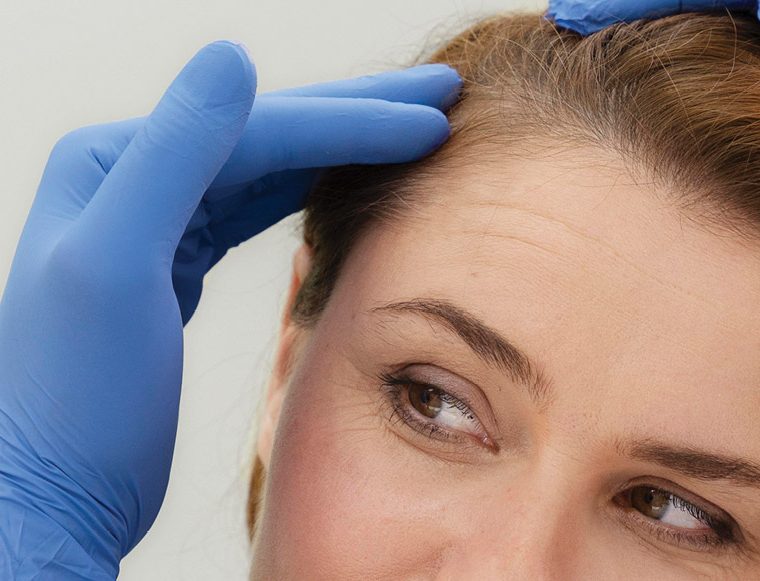
Yes, women can have a hair transplant without completely shaving their hair in selected cases. Depending on the number of grafts required, the condition of the donor area and the technique being used, the procedure may be performed with partial shaving, individual trimming or an unshaven extraction approach.
For many women, keeping their existing hairstyle is an important part of the treatment decision. A visible shaved area can be difficult to conceal during work, social activities or travel. Unshaven and partially shaven options are therefore designed to make the early recovery period less noticeable.
However, “without shaving” does not always mean that every hair remains completely untouched. In many procedures, only the follicles selected for extraction are shortened, or a small section of the donor area is shaved and hidden beneath the longer hair above it.
The most suitable approach depends on the pattern of hair loss, donor density, hair length and number of grafts required. Protecting the follicles and donor area should always be prioritised over avoiding shaving at all costs.
What Does a No-Shave Hair Transplant Mean?
The term “no-shave hair transplant” can describe several different approaches. In a partially shaven procedure, a narrow section at the back of the scalp is trimmed while the surrounding long hair is left untouched. Once the hair falls naturally over the area, the shaved section may be difficult to notice.
Another option is individual follicle trimming. Instead of shaving a complete section, only the follicular units selected for extraction are shortened. The remaining donor hair keeps its original length and helps conceal the small extraction points.
Unshaven long-hair FUE can also be performed without cutting the visible hair shafts before extraction. The follicles are removed while the hair remains long. This is a technically demanding approach because the longer strands can make access and graft handling more difficult. International hair restoration guidance also notes that unshaven FUE may increase the risk of follicle transection when the hidden direction of the follicle is not followed carefully.
The recipient area may also remain unshaven when there is enough space to place grafts between the existing hairs. This can be helpful for women experiencing widening of the parting line, frontal thinning or selected areas of reduced density.
How Is an Unshaven Hair Transplant Performed?
The procedure begins with an assessment of the donor and recipient areas. The cause of the hair loss, donor density, scalp health, hair thickness and likely future thinning should all be considered before deciding whether an unshaven approach is practical.
During FUE, follicular units are individually extracted from the donor area using small punch instruments. FUE generally requires shaving for easier access, but selected follicles can sometimes be trimmed individually or removed using a long-hair technique.
After extraction, the grafts are prepared and implanted into the thinning area. DHI may be used for the placement stage when controlled insertion between existing hairs is appropriate. However, choosing DHI does not automatically mean that no shaving will be required. The amount of trimming is mainly determined by how the follicles will be accessed and safely extracted from the donor area.
When the existing hair is left long, it must be carefully separated throughout the procedure. This can make the session slower than a fully shaven transplant, particularly when a large number of grafts is planned.
Which Women May Be Suitable for a Hair Transplant Without Shaving?
An unshaven hair transplant may be considered for women with a stable form of permanent hair loss and a sufficiently strong donor area. Female pattern hair loss, selected cases of permanent traction alopecia and localised hairline thinning may be suitable for transplantation after the cause of the hair loss has been evaluated. Hair transplantation can be an option for some women with female pattern hair loss, but it is not appropriate for every type of thinning.
Women who need a limited number of grafts are often better candidates for a no-shave or partial-shave procedure. A small hairline correction or focused density treatment is generally easier to perform without extensive shaving than a procedure covering a large area.
Hair length is also important. Medium or long hair can conceal a small trimmed section in the donor area more effectively. Women with very short hair may find it more difficult to hide partial shaving.
Diffuse thinning requires careful assessment because it may affect both the recipient and donor areas. If the donor follicles are also becoming weaker, transplantation may not provide a predictable long-term result.
Sudden shedding, hair loss after childbirth, alopecia areata and active inflammatory or scarring conditions should be properly investigated before surgery. Some types of female hair loss may be temporary, while active scarring conditions can continue damaging both natural and transplanted follicles.
What Are the Benefits and Limitations?
The main benefit of an unshaven hair transplant is discretion. The surrounding hair can cover the donor and recipient areas, making the early signs of the procedure less noticeable.
Women may be able to return to their normal appearance more comfortably without waiting for a large shaved area to grow back. Existing hair can also help conceal redness and small extraction marks during the first stage of recovery.
Keeping the recipient hair long may make it easier to visualise the natural direction, parting line and distribution of the existing strands. This can support controlled placement when grafts are being added between natural hairs.
However, an unshaven procedure is not always the most practical choice. Longer hair can reduce visibility, make follicle extraction slower and complicate graft handling. The procedure may also take longer than a fully shaven session.
The number of grafts that can be extracted comfortably may be more limited. When extensive coverage is required, partial or full donor shaving may provide clearer access and allow the follicles to be removed more efficiently.
Avoiding shaving should never compromise graft quality. If keeping every hair long increases the risk of damaging follicles or overworking a small donor section, a limited and carefully concealed shave may be the safer option.
What Is Recovery Like After an Unshaven Hair Transplant?
Recovery is generally similar to other individual follicular hair transplant procedures. Mild redness, tenderness, swelling and small scabs may develop during the first several days.
The existing long hair can help conceal the treated areas, but it may also make washing more delicate. Hair should be separated gently so that the scalp can be cleaned without rubbing, scratching or pulling the implanted grafts.
Heavy styling products, hair colour, chemical treatments and tight hairstyles should be avoided during early recovery. The scalp needs time to heal before returning to normal styling routines.
The visible transplanted hairs commonly shed during the first few weeks. This is a normal stage of the process and does not necessarily mean that the follicles have been lost. New growth develops gradually, with many patients seeing noticeable improvement between six and nine months. Full maturation may take approximately twelve months or longer.
The existing hair provides immediate visual coverage, but it does not make the transplanted follicles grow faster. The final result still depends on the normal hair growth cycle, graft survival and the long-term progression of the woman’s natural hair loss.
Frequently Asked Questions About Hair Transplants for Women Without Shaving
Can a woman have a completely unshaven hair transplant?
Yes, completely unshaven extraction may be possible in selected cases. However, it is more technically demanding and may not be practical when a large number of grafts is required.
Is partial shaving more common than complete no-shave transplantation?
Partial shaving is often a practical option because it provides clearer access to the donor follicles while allowing the surrounding long hair to conceal the trimmed section.
Does DHI require shaving?
DHI describes the graft placement stage and does not automatically determine whether shaving is needed. The decision mainly depends on donor access, hair length and the number of grafts required.
Can the recipient area remain unshaven?
Yes, grafts may be placed between existing hairs without shaving the recipient area when there is enough space to work safely.
Is an unshaven transplant suitable for diffuse female hair loss?
It may be suitable in selected cases, but the donor area must be carefully evaluated. If thinning also affects the donor follicles, transplantation may not provide a reliable result.
Can long hair hide the donor area after transplantation?
Medium or long hair can often conceal a small partially shaved section and the early extraction marks at the back of the scalp.
Does a no-shave hair transplant take longer?
It can take longer because the existing hair must be separated carefully during extraction and implantation.
Can women return to work quickly after an unshaven transplant?
Many women find the procedure easier to conceal, but redness, swelling or scabbing may still be visible during the first days. Recovery time varies according to the treatment area and individual healing.
Will the existing hair be damaged during the procedure?
Careful planning is needed when grafts are placed between existing hairs. Temporary shedding can occur, but protecting the surrounding follicles is an important part of recipient-area planning.
When will the transplanted hair begin to grow?
The transplanted shafts may shed during the first few weeks. New growth generally begins gradually over the following months, with the result continuing to mature for around twelve months or longer.