For many people experiencing permanent hair loss, travelling to Turkey for a hair transplant can be worth considering. The country attracts international patients who want access to modern hair transplant techniques, organised treatment journeys and a more manageable overall budget than they may find at home.
However, a hair transplant in Turkey is not automatically worth it simply because the treatment appears affordable or because a package includes accommodation and transportation. The quality of the assessment, the condition of the donor area, the people involved in the procedure, the way the hairline is planned and the support provided after the patient returns home are much more important than the destination alone.
A well-planned transplant can provide a natural-looking and long-lasting improvement for a suitable candidate. A poorly researched procedure, on the other hand, may lead to weak density, an unnatural hairline, visible donor thinning or the need for corrective treatment. Whether the journey is worthwhile therefore depends on making the right decision rather than simply choosing the lowest offer.
Why Do International Patients Choose Turkey for Hair Transplants?
International patients often consider Turkey because hair transplantation has become a well-established part of the country’s health tourism sector. Many treatment journeys are designed around patients travelling from abroad, which can make the organisation of consultation, airport transfer, accommodation, the procedure and initial aftercare more convenient.
Another important reason is the relationship between the treatment experience and overall cost. In some countries, the procedure alone may require a substantial budget before travel, accommodation and follow-up are considered. In Turkey, international packages may combine several parts of the journey into a single plan.
Convenience does not mean that every package offers the same standard of care. A visually attractive website, hotel stay or private transfer cannot replace a proper hair loss assessment and careful surgical planning. International patients should focus first on who evaluates their hair loss, who performs each stage of the procedure and what support is available if recovery does not follow the expected course.
Turkey’s Ministry of Health maintains current lists of healthcare providers authorised to offer international health tourism services. Checking whether a provider appears on the relevant authorised list can be an important part of researching treatment in Turkey.
Is a Hair Transplant in Turkey Really More Affordable?
A hair transplant in Turkey may be more financially accessible for international patients, but the lowest advertised price should not be the main reason for choosing a provider.
Hair transplant costs can be influenced by the extent of hair loss, the number of grafts required, the extraction and implantation approach, the complexity of the donor area and the services included in the treatment plan. Travel dates, accommodation preferences and whether additional sessions are needed can also affect the overall budget.
Patients should compare the complete journey rather than only the procedure price. Flights, medication, accommodation outside the package, time away from work and possible future sessions should all be considered.
An affordable procedure can offer good value when the treatment is planned responsibly. A very cheap procedure may become expensive if the donor area is damaged, the hairline needs correction or the patient has to travel again for repair work.
The value of a hair transplant should therefore be judged by the quality of the long-term result, not by how little was paid on the day of the procedure.
What Does “Worth It” Mean in Hair Transplantation?
The meaning of “worth it” is different for every patient. One person may want to restore a receding frontal hairline, while another may hope to improve coverage across the crown or mid-scalp.
For some people, the main benefit is feeling more comfortable with their appearance. For others, it is the convenience of no longer relying on hairstyles, fibres or temporary cosmetic products to conceal thinning areas.
A hair transplant may feel worthwhile when the improvement is natural, the donor area remains balanced and the result continues to suit the person as they age. It may feel less worthwhile when expectations are unrealistic or when the available donor hair cannot provide the density the patient imagined.
Before travelling, patients should be clear about what they want the procedure to change. A hair transplant redistributes existing follicles; it does not create an unlimited new supply of hair. The aim is usually to create the visual impression of stronger coverage rather than restore every follicle that has been lost.
Who May Benefit From a Hair Transplant in Turkey?
A hair transplant may be suitable for people with a stable form of permanent hair loss and a healthy donor area containing enough resistant follicles.
Pattern hair loss is one of the most common reasons for transplantation. Selected cases of permanent hairline loss, traction-related damage or stable scarring may also be considered after the underlying cause has been properly assessed.
The NHS explains that hair transplantation is generally intended for permanent baldness and is not usually suitable for every type of hair loss, including some conditions that cause bald patches.
A suitable candidate should also have realistic expectations. The size of the thinning area must be considered together with the donor supply. A person with advanced hair loss and a limited donor area may achieve an improvement, but complete coverage at very high density may not be possible.
Age alone does not determine suitability. The stability of the hair loss, the likely future pattern and the strength of the donor follicles are generally more important than a specific age.
When Might a Hair Transplant in Turkey Not Be Worth It?
Travelling for a hair transplant may not be worthwhile when the cause of hair loss has not been identified. Sudden shedding, patchy loss, scalp inflammation or diffuse thinning may require further investigation before surgery is considered.
The procedure may also be unsuitable when the donor area is weak. If follicles are taken from an unstable or already thin region, the transplanted hair and the appearance of the donor area may become less predictable over time.
A transplant may not meet expectations when a patient wants the same density they had before hair loss began. Donor follicles are limited, and the procedure must use them strategically.
It may also be sensible to wait when hair loss is progressing rapidly. Restoring a low hairline too early can use valuable grafts while the natural hair behind the transplanted area continues to recede.
The procedure should not be treated as an urgent purchase. If a provider pressures a patient to book flights or pay immediately before a meaningful assessment has taken place, taking more time to research may be the safer decision.
Does the Country Determine the Quality of the Result?
The country alone does not determine whether a hair transplant will be successful. High-quality and poor-quality procedures can occur in many destinations.
The result depends on patient selection, donor management, hairline planning, graft handling, recipient-site design, hygiene standards and aftercare. The communication between the patient and the treatment team is also important, especially when the patient will return to another country shortly after the procedure.
International hair restoration organisations advise patients travelling abroad to research who will actually perform the procedure and to avoid situations where important surgical stages are delegated to people who are not appropriately licensed.
A patient should therefore evaluate the specific provider rather than relying on Turkey’s general reputation for hair transplantation.
How Important Is the Initial Hair Analysis?
The initial assessment is one of the most important stages of the entire journey. It should evaluate the cause and pattern of hair loss, the quality of the donor area, scalp health, hair thickness, follicular groupings and the likely progression of future thinning.
Photographs can support an initial online assessment, but they cannot always show the true donor density, scalp condition or direction of follicle growth. The final plan may need to be adjusted after an in-person examination.
A responsible assessment should explain what can realistically be achieved with the available donor supply. It should also consider whether the patient might need to preserve grafts for future hair loss.
The number of grafts should not be chosen only to make a package appear more attractive. Excessive extraction can weaken the donor area, while too few carefully distributed grafts may fail to create sufficient coverage.
Is DHI in Turkey Worth It?
DHI may be worthwhile for suitable patients when controlled graft placement is useful for the planned recipient area. The technique uses an implanter device to position extracted follicular units according to the desired angle, direction and depth.
It may be considered for hairline work, selected density procedures or implantation between existing hairs when there is enough space to work safely.
DHI should not be understood as a completely separate biological form of hair transplantation. The follicles still need to be extracted from the donor area before they are implanted. The International Society of Hair Restoration Surgery notes that DHI is a term used for certain implantation approaches rather than a separate hair transplant method.
The result depends on the health of the grafts, the quality of extraction, donor selection and placement planning. Choosing DHI only because it is marketed as newer or more advanced does not guarantee a better outcome.
Is FUE in Turkey Worth It?
FUE can be a worthwhile option for patients who are suitable for individual follicular extraction. During the procedure, follicular units are removed individually from the donor area and transferred to the thinning regions.
The technique avoids the long linear donor scar associated with strip-based harvesting. However, it still creates many small extraction points, and removing too many grafts can lead to visible donor thinning.
The quality of FUE depends on how carefully the follicles are extracted and how evenly the donor area is managed. Fast extraction is not necessarily better if it increases follicle damage or creates an uneven donor appearance.
FUE should be selected because it suits the patient’s hair characteristics, donor area and treatment goals, not simply because it is a familiar term used in advertisements.
Does the Number of Grafts Show Whether the Package Is Good?
A higher graft number does not automatically make a hair transplant package better. The correct number is the amount that can be safely extracted and effectively used to improve the recipient area.
Some patients may need fewer grafts because their hair is thick, curly or provides strong visual coverage. Others may require a different distribution because they have fine hair or a large contrast between their hair and scalp.
The location of the hair loss also affects the plan. Restoring the frontal hairline may create a stronger visual change than spreading the same number of grafts thinly across the entire scalp.
Very high graft promises should be considered carefully when they are made before the donor area has been properly examined. The donor supply is limited and should be managed with possible future hair loss in mind.
Can a Hair Transplant in Turkey Look Natural?
A hair transplant performed in Turkey can look natural when the hairline, density, angles and graft distribution are personalised.
A natural hairline should not appear perfectly straight or uniformly dense. The leading edge usually requires fine, single-hair follicular units, while stronger multi-hair grafts can be positioned further behind to create coverage.
Hair direction is equally important. Grafts placed at an incorrect angle may grow away from the scalp or conflict with the surrounding hair.
The design should also be appropriate for the person’s age, facial proportions and likely future hair loss. A hairline that looks attractive immediately after transplantation may become difficult to maintain if it is placed too low and the natural hair continues to recede.
Modern hair transplantation can provide natural-looking, permanent results in suitable patients, but achieving this depends on planning and execution rather than the name of the package.
Are Hair Transplant Results Permanent?
Transplanted follicles are generally selected from areas that are more resistant to hereditary pattern hair loss. When they survive the procedure and establish themselves in the recipient area, they can continue producing hair for many years.
This does not mean the entire scalp will remain unchanged. Natural, non-transplanted hair may continue to thin around or behind the transplanted follicles.
A patient who restores the frontal hairline may later notice thinning in the mid-scalp or crown. This does not necessarily mean the transplant has failed. It may reflect the continued progression of the original hair loss.
Long-term planning is therefore essential. The donor supply should not be exhausted in one area without considering what the scalp may look like several years later.
How Long Does It Take to See Whether the Procedure Was Worth It?
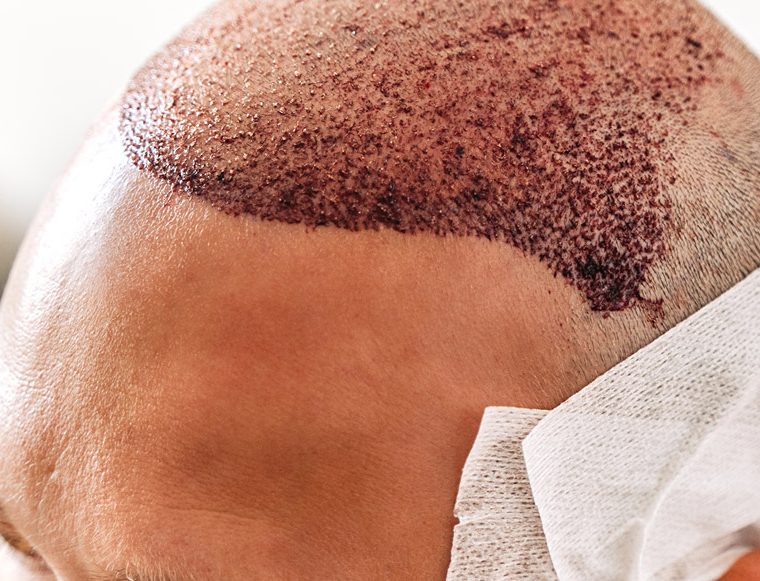
A hair transplant cannot be judged immediately after the procedure. During the first days, the scalp may have redness, swelling and small scabs around the implanted follicles.
The transplanted hair shafts commonly shed during the first several weeks. This temporary shedding can make the recipient area appear thinner before new growth begins.
The American Academy of Dermatology states that many patients see results between six and nine months, while some require approximately twelve months. It also notes that shedding between two and eight weeks is expected.
The NHS gives a broader recovery range, explaining that new hair may begin appearing after several months and that complete results can take approximately ten to eighteen months.
Growth does not occur evenly. Some follicles may begin producing hair earlier than others, and the first strands may appear fine before becoming stronger. For this reason, the value of the procedure should not be assessed during the first weeks or months.
What Is Recovery Like After a Hair Transplant in Turkey?
The first stage of recovery usually takes place while the patient is still in Turkey. Initial washing and a short follow-up may be included before the patient travels home.
Small scabs, redness, tenderness and temporary swelling are common during early healing. The transplanted area should be protected from scratching, rubbing and direct pressure.
The NHS advises being particularly careful with transplanted grafts during the first two weeks and notes that many people may need between one and two weeks away from work.
International patients should consider what recovery will be like after returning home. Long flights, work commitments, exercise routines and social events may need to be planned around the early healing period.
A treatment journey is more likely to feel worthwhile when the patient understands the recovery process before travelling rather than discovering the restrictions after the procedure.
How Many Days Should You Stay in Turkey?
The necessary stay depends on the treatment plan, flight schedule and whether an initial wash or follow-up check is included.
International patients commonly need enough time for an in-person assessment, the procedure and the first stage of aftercare. Travelling home immediately after surgery may be possible in some situations, but it can create unnecessary pressure during an already sensitive period.
Allowing time for the scalp to be checked and for the first washing instructions to be demonstrated can make the journey more comfortable.
Patients should also avoid treating the trip as a normal holiday immediately after the procedure. Long periods in direct sunlight, swimming, intense walking, sweating and crowded activities may not be appropriate during early recovery.
The travel plan should be built around the procedure rather than trying to fit the procedure into a busy sightseeing schedule.
What Should Be Included in a Hair Transplant Package?
A useful international treatment package should clearly explain the stages of the medical service and the travel-related support.
The patient should understand what the initial assessment includes, which technique is being considered, how the graft estimate is determined and what type of aftercare will be provided.
Travel-related services may include airport transportation and accommodation, but these features should be viewed as practical support rather than evidence of treatment quality.
The package should also explain medication, washing products, follow-up communication and what happens if the patient experiences unexpected symptoms after returning home.
Any service not included should be clearly stated before the patient books flights. Transparent communication helps prevent the advertised package from becoming more expensive or complicated after arrival.
How Important Is Follow-Up After Returning Home?
Follow-up is especially important for international patients because they may be hundreds or thousands of kilometres away from the treatment location during recovery.
The patient should know how to share photographs, report symptoms and ask questions after returning home. Communication should not end once the airport transfer is complete.
Most early concerns involve washing, scabs, redness, swelling, sleeping position or temporary shedding. Clear instructions can prevent patients from damaging the grafts while trying to solve a normal recovery issue themselves.
Unexpected pain, increasing redness, discharge or significant swelling should be assessed promptly. The patient should know who to contact and how quickly a response can be expected.
Long-term follow-up can also help monitor growth and the progression of natural hair loss around the transplanted area.
What Questions Should You Ask Before Booking?
Before booking a hair transplant in Turkey, patients should understand who will evaluate the hair loss and who will be involved in each stage of the procedure.
They should ask how the donor area will be protected, how the graft number is calculated and why a particular technique is being recommended.
It is also helpful to ask what can realistically be achieved in the frontal area, mid-scalp and crown. A treatment plan that promises maximum density everywhere may not reflect the limits of the donor supply.
Patients should understand how complications are handled, what follow-up is available after they return home and whether future hair loss has been included in the planning.
The International Society of Hair Restoration Surgery advises medical tourists to research qualifications, licensing, responsibilities during surgery and the short- and long-term treatment plan before making a commitment.
Should You Choose a Hair Transplant Based on Before-and-After Photos?
Before-and-after photographs can help patients understand the type of results a provider has achieved, but photographs should not be the only factor used to make a decision.
Lighting, hair length, styling, camera angle and the use of hair products can significantly change how density appears. The before and after images should be taken from comparable angles and under similar conditions.
Patients should look for cases with a hair loss pattern, hair type and donor quality similar to their own. A result achieved on thick, curly hair may not predict the same visual density in someone with very fine, straight hair.
The donor area should also be visible whenever possible. A strong frontal result does not tell the whole story if the back of the scalp has been overharvested.
Photographs are most useful when they support a detailed treatment explanation rather than replace it.
Are Reviews Enough to Decide?
Patient reviews can provide information about communication, organisation, accommodation and the general treatment experience. However, they may not always show the long-term medical result.
A review written several days after surgery may describe a comfortable journey, but meaningful hair growth has not yet occurred at that stage. Reviews that include updates after six, nine or twelve months may provide more useful information about development.
Extremely positive or negative reviews should be considered alongside a wider pattern. Patients should look for consistent comments about follow-up, transparency and whether the final treatment matched what had been explained beforehand.
Reviews cannot replace an individual assessment. A procedure that worked well for one person may not be suitable for someone with a different donor area, hair loss pattern or scalp condition.
Is It Worth Travelling Alone for a Hair Transplant?
Many international patients travel alone for hair transplantation, particularly when transportation and accommodation have already been arranged.
Travelling alone can be manageable when the treatment journey is clearly organised and the patient is comfortable following written aftercare instructions.
Some people may prefer to travel with a companion because they feel tired after the procedure or want help navigating the airport and hotel. A companion can also provide reassurance during the first night.
The decision depends on confidence, travel experience, the length of the journey and the amount of personal support the patient prefers.
Patients travelling alone should keep essential contact details, medication instructions and transportation information easily accessible.
Can the Procedure Save Money in the Long Term?
A successful transplant may reduce the need for temporary cosmetic products used to conceal thinning areas. However, it should not be viewed as a guaranteed way to eliminate every future hair-related expense.
Natural hair loss can continue after transplantation. Some patients may consider ongoing treatment to protect non-transplanted hair, while others may need another procedure if a new area becomes thinner.
The American Academy of Dermatology notes that treatment may be recommended after transplantation because natural hair loss can continue and affect the overall appearance.
The financial value should therefore be judged over the long term. A carefully planned procedure that remains natural for many years may offer strong value, while a rushed transplant requiring correction can create additional cost.
How Can You Decide Whether a Hair Transplant in Turkey Is Worth It for You?
A hair transplant in Turkey may be worth it when the hair loss is suitable for surgery, the donor area can support the planned result and the patient has realistic expectations.
It can also be worthwhile when the treatment plan is clear, the authorised provider is transparent about who performs each stage and the aftercare continues after the patient returns home.
The procedure becomes less worthwhile when the decision is based only on a low price, a high graft promise or an attractive travel package.
Patients should feel that their questions have been answered without pressure. They should understand both the possible benefits and the limitations before paying or booking flights.
The strongest reason to choose Turkey is not simply that the procedure may cost less. It is the opportunity to receive a carefully planned transplant within an organised international treatment journey, provided that the specific provider and treatment plan have been researched responsibly.
Frequently Asked Questions About Hair Transplants in Turkey
Is a hair transplant in Turkey worth the money?
It can be worth the money when the patient is suitable, the donor area is managed carefully and the treatment plan is designed for a natural long-term result. The lowest price does not always offer the best value.
Why are hair transplants in Turkey more affordable?
Operating costs, service structures and international treatment packages can differ between countries. Patients should compare what is included and focus on treatment quality rather than assuming that every lower-priced option offers the same standard.
Is it safe to get a hair transplant in Turkey?
Hair transplantation can be performed safely in Turkey when the patient chooses an authorised healthcare provider, understands who performs each stage and receives appropriate assessment and follow-up. As with any surgical procedure, risks cannot be completely removed.
How can I check whether a provider in Turkey is authorised?
The Republic of Turkey Ministry of Health publishes current lists of healthcare providers authorised to offer international health tourism services. Patients can check the relevant official list while researching their options.
Does an all-inclusive package mean the treatment is high quality?
No. Accommodation, airport transfer and translation support can make the journey easier, but they do not prove the quality of the medical assessment or procedure.
Is DHI better than FUE in Turkey?
Neither option is automatically better for every patient. FUE commonly describes individual follicle extraction, while DHI generally refers to a particular implantation approach. Suitability depends on the donor area, recipient area, hair type and treatment goals.
How many grafts will I need?
The number depends on the size and location of the thinning area, donor density, hair thickness, curl pattern and desired coverage. A reliable estimate generally requires a detailed assessment.
Can I achieve full density with one hair transplant?
A transplant can improve coverage, but it may not recreate the original density across a large area. The donor supply is limited and needs to be distributed strategically.
How long should I stay in Turkey after the procedure?
The required stay varies according to the treatment schedule and travel plan. Patients should generally allow enough time for consultation, the procedure and the recommended initial washing or follow-up.
Can I fly home after a hair transplant?
Many international patients fly home after the early follow-up stage. The timing should take account of swelling, comfort, journey length and the specific aftercare instructions.
How long will the transplanted hair last?
Successfully established follicles are expected to provide long-term growth and may continue producing hair for many years. Natural hair around the transplanted area can still become thinner over time.
When will I see the final result?
Early growth develops gradually over several months. Many patients see meaningful improvement between six and nine months, while fuller maturation may require approximately twelve months or longer.
Will the transplanted hair fall out?
The visible transplanted hairs commonly shed during the first several weeks. This is usually temporary, and new growth develops later from the follicles beneath the skin.
Can I need a second hair transplant?
A second procedure may be considered when the patient wants additional density or when natural hair loss progresses into another area. Needing a future session does not automatically mean the first transplant was unsuccessful.
What is the biggest risk of choosing only by price?
Choosing only by price can lead patients to overlook donor damage, poor hairline design, limited follow-up or uncertainty about who performs the procedure. Corrective treatment may be more difficult and expensive than the original transplant.
Should I book my flight before the consultation?
It is generally better to receive an initial assessment and understand the proposed treatment schedule before confirming non-refundable travel arrangements. The final plan may still change after an in-person examination.