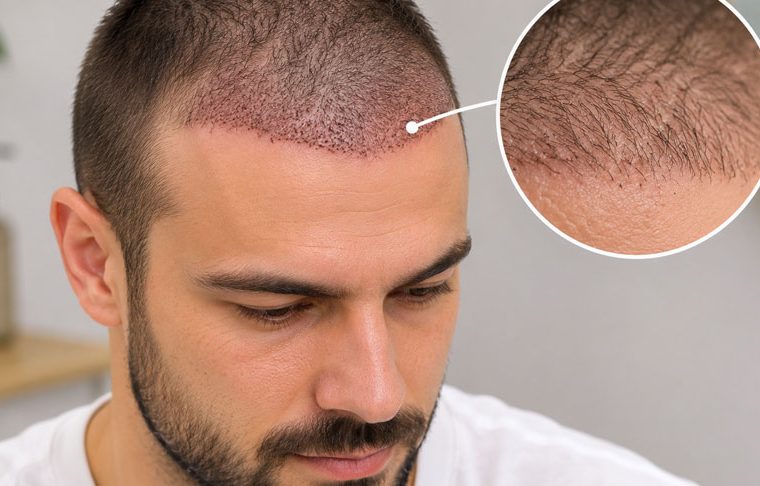
Two weeks after a hair transplant is an important point in the recovery process. The scalp usually looks very different from the first few days: much of the initial swelling has normally settled, crusts may have disappeared or be close to disappearing, and the donor and recipient areas are continuing to heal.
At the same time, this does not mean that the hair transplant result is beginning to appear. In fact, the next stage may involve temporary shedding of the transplanted hairs before new growth begins several months later.
Recovery varies from person to person. The number of grafts, treatment area, hair characteristics, extraction approach and individual healing response can all influence what the scalp looks like at the two-week stage.
What Should the Scalp Look Like After 2 Weeks?
By around two weeks, many of the visible signs associated with the first days of a hair transplant have reduced considerably.
Small crusts that formed around the transplanted grafts generally loosen during the first one to two weeks. In many patients, most of these crusts will have disappeared by approximately day 14 when the recommended washing routine has been followed.
Redness may also be much less noticeable, although some patients can continue to have mild pinkness or sensitivity for longer. Skin type, scalp sensitivity and the size of the recipient area can all affect how quickly the redness fades.
The donor region is usually further along in its healing process as well. After individual follicular extraction, the small extraction points typically become less noticeable as the surrounding skin heals.
At this stage, the scalp may begin to look more normal, but it should still be treated gently.
Are the Hair Grafts Secure After 2 Weeks?
The first two weeks are one of the most important periods for protecting newly transplanted grafts.
During the early days, rubbing, scratching and unnecessary pressure on the recipient area should be avoided. NHS guidance specifically notes that transplanted hair needs particular care during the first two weeks because the grafts are not yet secure during the early recovery period.
By the end of approximately two weeks, the healing process has progressed significantly compared with the first few days. However, this does not mean the scalp should immediately be treated aggressively.
Washing, drying, brushing and styling should still be performed carefully according to the individual aftercare instructions.
A successful **Hair Transplant** also depends on following the recovery plan rather than simply reaching a particular number of days after the procedure.
Is Shedding Normal 2 Weeks After a Hair Transplant?
Yes. Temporary shedding can begin around this stage and is one of the most common concerns after a hair transplant.
The transplanted hairs visible above the scalp may start to fall out while the follicles remain beneath the skin. This process does not automatically indicate that the transplanted grafts have been lost.
The American Academy of Dermatology states that transplanted hairs commonly shed between approximately two and eight weeks after hair transplant surgery.
Some patients notice shedding early in this period, while others experience it several weeks later. The amount of visible shedding can also vary.
For this reason, the transplanted area may temporarily appear less dense after looking relatively full during the first days following the procedure.
This temporary phase is part of the transition toward a new growth cycle.
Can You Return to Normal Life After 2 Weeks?
Many patients feel much more comfortable returning to their usual daily routine around the two-week point.
The visible crusting has often reduced considerably, and the scalp generally attracts less attention than it did immediately after the procedure. Depending on the type of work, patients may already have returned to their normal professional routine.
However, returning to everyday life does not necessarily mean that every activity should immediately return to normal.
Exercise recommendations can vary. The NHS notes that some patients may be advised to reduce exercise during the first month after a hair transplant.
Activities involving heavy sweating, direct trauma to the scalp or significant physical exertion should therefore be resumed according to the individual aftercare plan.
Sun exposure should also be approached carefully, as the healing scalp may remain sensitive even when it looks normal from the outside.
What Happens After the Two-Week Stage?
After the first two weeks, the recovery process begins to shift from visible scalp healing toward the waiting phase of hair growth.
Temporary shedding may continue over the following weeks. As the transplanted hairs fall, the scalp can sometimes look similar to how it appeared before the procedure.
This phase can concern patients who expect the hair to continue growing immediately after transplantation. However, transplanted follicles generally enter a resting phase before beginning a new cycle of growth.
Visible new hair does not appear immediately. Early new growth often begins several months after the procedure, and the result gradually becomes more noticeable over time.
The NHS notes that new hair usually begins to appear from around the fourth month, while the AAD reports that many patients see more meaningful results between six and nine months.
Two weeks after a hair transplant should therefore be viewed as the end of the earliest healing stage rather than the beginning of the final result.
Frequently Asked Questions About 2 Weeks After a Hair Transplant
Should All Scabs Be Gone After 2 Weeks?
For many patients, most crusts have disappeared by approximately two weeks. The exact timing can vary, and crusts should be managed according to the recommended washing routine rather than being picked aggressively.
Is Redness Normal 2 Weeks After a Hair Transplant?
Mild redness can still be present in some patients at two weeks. Skin sensitivity, complexion and the size of the treated area can influence how long redness remains visible.
Can Transplanted Hair Fall Out After 2 Weeks?
Yes. Temporary shedding can begin around this stage. Transplanted hairs commonly shed between approximately two and eight weeks after the procedure.
Does Shedding Mean the Hair Transplant Has Failed?
No. The visible hair shaft can shed while the transplanted follicle remains beneath the scalp. New growth can develop later as the follicle enters another growth cycle.
Can I Wash My Hair Normally After 2 Weeks?
Washing generally becomes easier as healing progresses, but patients should follow their individual aftercare instructions before returning completely to their usual washing routine.
Can I Touch My Transplanted Hair After 2 Weeks?
The grafts are considerably further into the healing process compared with the first few days, but unnecessary scratching or aggressive rubbing of the scalp should still be avoided.
Can I Wear a Hat 2 Weeks After a Hair Transplant?
Whether a hat is appropriate depends on the type of headwear and the individual recovery plan. Anything tight or capable of rubbing the recipient area should be avoided until it is considered safe.
Can I Exercise 2 Weeks After a Hair Transplant?
Some light activity may be possible, but recommendations for strenuous exercise vary. The NHS notes that exercise may be reduced during the first month, so the individual aftercare plan should be followed.
Why Does My Hair Look Thinner After 2 Weeks?
Temporary shedding may begin during this period, causing the transplanted area to look thinner. This can be part of the expected post-transplant growth cycle.
When Will New Hair Start Growing After the Two-Week Stage?
New visible growth generally takes several months. Early growth may begin around the third or fourth month, with density and thickness developing progressively afterward.
Is 2 Weeks Enough to Judge a Hair Transplant Result?
No. Two weeks is still an early recovery stage. The transplanted hairs may still shed, while meaningful growth and density develop gradually over the following months.
Can the Donor Area Still Be Sensitive After 2 Weeks?
Some mild sensitivity, tightness or altered sensation can persist even when the donor area looks healed externally. The recovery experience varies between patients.