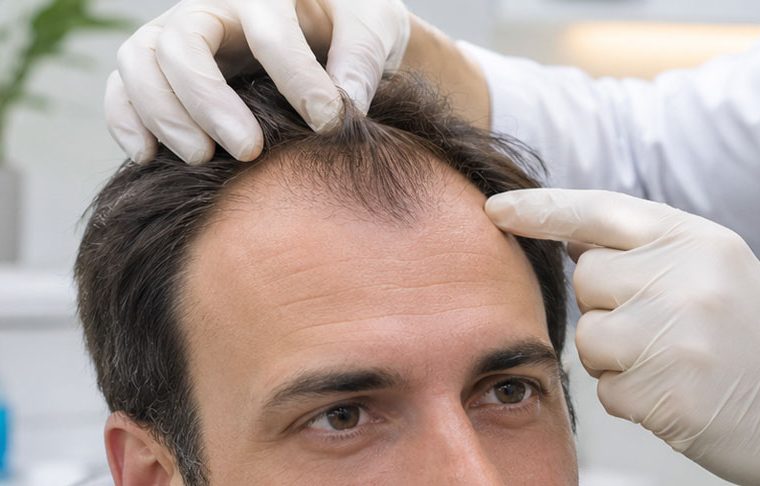
When planning a hair transplant, one of the first questions many patients ask is how many grafts they will need. For someone with a relatively small area of hair loss, a 1500 grafts hair transplant may be enough to create a noticeable improvement, particularly around the frontal hairline, temples or another localised area.
However, graft numbers should never be considered on their own. Two patients receiving exactly 1500 grafts can achieve very different visual results because hair thickness, texture, donor density, existing hair and the size of the recipient area all affect coverage.
This is why 1500 grafts may be a suitable treatment plan for one patient but insufficient for another with more extensive hair loss.
What Does 1500 Grafts Mean in a Hair Transplant?
A graft is a naturally occurring follicular unit rather than a single individual hair. One graft may contain one, two, three or sometimes more hairs.
This means that 1500 grafts does not simply mean 1500 individual hairs. The total number of hairs transplanted can be higher depending on the follicular units available in the donor area.
During treatment planning, attention is therefore given not only to the total graft number but also to the characteristics of those grafts.
Single-hair grafts can be particularly useful when creating a soft and natural-looking frontal hairline, while grafts containing multiple hairs may contribute to visual density further behind the hairline.
The distribution of the available grafts is often just as important as the total number.
What Area Can 1500 Hair Grafts Cover?
There is no fixed area that 1500 grafts will cover for every patient.
In general, this graft number is more commonly associated with a smaller or localised area rather than extensive thinning across the entire scalp. It may be considered when improving a receding hairline, filling the temples, strengthening a frontal forelock or adding density to a selected area.
Published research on advanced hair loss has reported that approximately 1500–2000 grafts may be used for a frontal forelock, while substantially larger graft numbers can be required when attempting broader frontal, mid-scalp or full-scalp coverage.
These numbers should only be viewed as general examples. The actual requirement must be calculated individually because the same number of grafts can produce different levels of coverage in different patients.
Is 1500 Grafts Enough for the Hairline?
For selected patients, 1500 grafts can be enough to improve the frontal hairline.
This may be particularly relevant when hair loss is still relatively limited and the main concern is recession around the temples or the front of the scalp rather than widespread baldness.
Hairline design also affects how those grafts are used. A lower or more aggressive hairline requires a larger treatment area, whereas a conservative design may allow the available grafts to be concentrated more effectively.
The goal should not simply be to place as many grafts as possible into the front. The hairline needs to suit facial proportions, age, existing hair and the possibility of future hair loss.
Careful graft distribution can therefore be more valuable than focusing only on reaching a particular graft number.
What Determines How Dense 1500 Grafts Will Look?
The visual effect of 1500 grafts can vary considerably between patients.
Hair shaft thickness is one of the important factors. Thicker hairs generally provide greater visual coverage than very fine hairs. Hair texture also matters because wavy or curly hair can cover the scalp differently from straight hair.
The number of hairs contained within each follicular unit also affects the final appearance. A donor area containing a higher proportion of multi-hair grafts may create a different visual result from one containing mainly single-hair units.
Existing hair in the recipient area is another important factor. When 1500 grafts are placed among existing hairs, they may contribute to an overall increase in visual density. When the same number is used on a completely bald area, the result may appear different.
Clinical planning also considers recipient-area density. Published hair-transplant literature describes recipient densities in the region of approximately 30–40 follicular units per square centimetre in some frontal transplantation strategies, although the appropriate density varies according to the individual case.
Who May Be Suitable for a 1500 Grafts Hair Transplant?
A 1500 grafts hair transplant may be considered for patients with relatively limited hair loss, a receding frontal hairline, temple recession, a smaller thinning area or patients undergoing an additional procedure to improve density in a previously treated area.
Suitability cannot be determined from the graft number alone.
The donor area must contain enough healthy and suitable hair, and the pattern of hair loss should be assessed before transplantation. Current hair density, miniaturisation, age, family history and the possibility of future hair loss may all influence treatment planning.
The donor area is also a limited resource. Extracting grafts without considering long-term donor preservation can create visible thinning and reduce the options available if another procedure is required in the future.
A personalised Hair Transplant in Turkey plan should therefore determine whether 1500 grafts are appropriate rather than choosing the graft number in advance.
Can 1500 Grafts Provide a Natural Result?
Yes, 1500 grafts can provide a natural-looking improvement when the number matches the size of the treatment area and the grafts are distributed appropriately.
Natural appearance depends on several details, including hairline design, graft selection, implantation angle, direction and the transition between transplanted and existing hair.
For a smaller frontal area, strategically placing the available grafts may create a meaningful change without attempting to cover an unnecessarily large region.
It is also important to have realistic expectations. A 1500 graft procedure designed to refine the hairline should not be expected to provide the same level of coverage as a much larger procedure intended for extensive frontal and crown hair loss.
The most appropriate result is therefore not necessarily the one with the highest graft number, but the one in which the available donor hair is used efficiently and with long-term planning in mind.
Frequently Asked Questions About a 1500 Grafts Hair Transplant
Is 1500 Grafts a Lot for a Hair Transplant?
1500 grafts is generally considered a relatively moderate graft number. It may be appropriate for smaller or localised areas, while extensive hair loss commonly requires a larger treatment plan.
How Many Hairs Are in 1500 Grafts?
A graft can contain more than one hair, so 1500 grafts does not equal exactly 1500 hairs. The total number of individual hairs depends on the composition of the follicular units extracted from the donor area.
Can 1500 Grafts Cover a Receding Hairline?
It may be enough for selected patients with limited frontal recession or temple hair loss. The required number depends on the size of the area and the planned position and shape of the new hairline.
Are 1500 Grafts Enough for the Crown?
This depends heavily on the size of the crown and the existing hair density. A small thinning area may require fewer grafts, while a large bald crown can require considerably more.
Can 1500 Grafts Cover the Whole Head?
For a patient with extensive baldness, 1500 grafts would generally not be expected to provide dense coverage across the entire scalp. Broader areas usually require significantly more grafts and careful donor planning.
Will 1500 Grafts Look Dense?
The appearance of density depends on the area treated, hair thickness, texture, colour contrast with the scalp, number of hairs per graft and existing hair in the recipient area.
Is 1500 Grafts Enough for the Temples?
For some patients, 1500 grafts may be sufficient to address the temples together with a limited amount of frontal recession. An individual assessment is required to determine how the grafts should be distributed.
Can Women Have a 1500 Grafts Hair Transplant?
Yes, selected female patients may be suitable for a procedure involving around 1500 grafts. However, the cause and pattern of female hair loss must be evaluated because diffuse thinning may require a different approach to treatment planning.
Can I Have More Hair Transplanted Later?
A second procedure may be possible if sufficient healthy donor hair remains. This is one reason why donor preservation and possible future hair loss should be considered during the first procedure.
How Long Does It Take to See the Result of 1500 Grafts?
Hair transplant growth is gradual. Early new growth generally begins several months after the procedure, with density and hair thickness continuing to develop over the following months. The final appearance may take around a year or longer to fully mature.
How Do I Know Whether I Need 1500 or 2500 Grafts?
The appropriate graft number is determined by examining the size of the recipient area, desired coverage, donor density, hair characteristics, existing hair and long-term hair-loss pattern. A scalp and donor-area assessment is therefore more reliable than selecting a graft number based on photographs of another patient.